Free Granny Cable Hexagon Blanket Pattern for Beginners
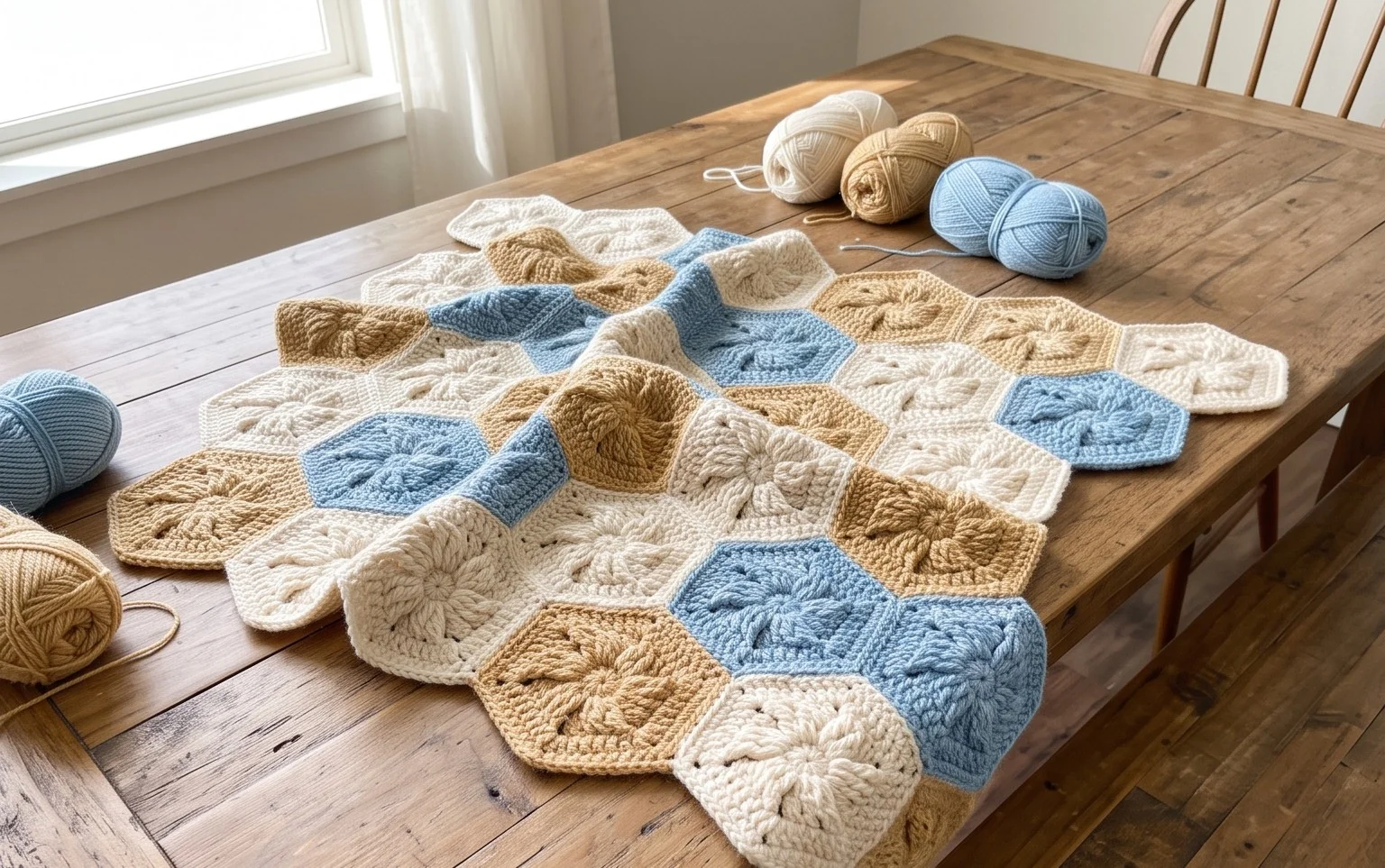
This six-sided blanket design carries a dense, squishy feel that provides warmth during cold evenings. You will find that joining these geometric shapes creates a modern, architectural look for your living room or bedroom. It is a satisfying project because the construction avoids tedious sewing of long seams, allowing you to focus on the rhythm of the work. Beginners will appreciate how the repeating round structure builds confidence quickly. You will learn to manipulate basic double crochet stitches into prominent cables that add dimension to the fabric. This blanket project turns simple yarn into a durable heirloom piece you will reach for constantly.
Why You’ll Love This Pattern
This beginner-friendly crochet coaster pattern uses simple, rhythmic stitches that make it an ideal project for practicing consistency in your tension. Because these coasters work up in under 30 minutes, they are a practical solution for using up leftover cotton yarn from larger projects. The textured surface provides excellent heat resistance while protecting your furniture from condensation. The finished design has a modern, minimalist aesthetic that fits well in any home decor style, and they make thoughtful, handmade gifts for housewarmings or holiday exchanges.
I finished a set of four in one afternoon, and the pattern was very easy to follow even as a total beginner. The circular shape turned out perfectly flat without any curling.
— Sarah, hobbyist crocheter
Pattern Overview & Skill Level
- Skill Level: Beginner
- Approximate Time: 20–30 minutes per coaster
- Construction: Worked in continuous rounds from the center outward
- Finished Dimensions & Sizing: 4 inches (10 cm) in diameter
Materials & Supplies Needed
- Yarn: Worsted weight (#4) 100% cotton yarn, approximately 15–20 yards per coaster. Cotton is necessary for heat resistance and absorbency.
- Hook Size: 5.0 mm (H-8) crochet hook.
- Notions: Tapestry needle for weaving in ends, scissors, and a stitch marker to track the start of rounds.
- Yarn Substitutions: You may use an acrylic blend, but it will not absorb moisture as effectively as cotton and may melt if used with extremely hot mugs. Using a different weight of yarn will change the size significantly.
Stitch Guide & Abbreviations (US Terms)
- ch: chain
- st/sts: stitch/stitches
- sc: single crochet
- inc: 2 single crochet in the same stitch (increase)
- sl st: slip stitch
- MR: magic ring (a loop of yarn used to start rounds)
Step-by-Step Pattern Instructions
Coaster Body
- Rnd 1: Start with a MR. Work 6 sc into the ring. Tighten the ring firmly. (6 sts)
- Rnd 2: Work 2 sc in each st around. Place a stitch marker in the first st of the round to keep track. (12 sts)
- Rnd 3: *1 sc in next st, 2 sc in next st. Repeat from * 6 times. (18 sts)
- Rnd 4: *1 sc in next 2 sts, 2 sc in next st. Repeat from * 6 times. (24 sts)
- Rnd 5: *1 sc in next 3 sts, 2 sc in next st. Repeat from * 6 times. (30 sts)
- Rnd 6: *1 sc in next 4 sts, 2 sc in next st. Repeat from * 6 times. (36 sts)
- Rnd 7: *1 sc in next 5 sts, 2 sc in next st. Repeat from * 6 times. (42 sts)
Finishing
After completing Rnd 7, slip stitch into the next stitch to level off the edge. Cut the yarn, leaving a 6-inch tail. Pull the tail through the final loop to fasten it. Using your tapestry needle, weave the tail through the stitches on the back side of the coaster. Trim any excess yarn close to the fabric, ensuring you do not cut into the crochet stitches.
Care & Washing Instructions
- Machine wash your cotton coasters on a gentle cycle in cold water.
- Reshape the coasters while damp and lay them flat on a towel to air dry.
- Avoid using bleach, as it can weaken the cotton fibers over time.
Pro Tips & Common Mistakes to Avoid
Maintain consistent tension throughout the project to ensure the coaster remains flat. If your coaster starts to ripple or ruffle, your stitches are likely too tight, or you are adding too many increases; if it begins to curl like a bowl, your tension is too loose, or you need to add more increases. Always use a stitch marker at the beginning of each round, as it is easy to lose count when working in continuous rounds. If you decide to use a thicker yarn, you will need to use a larger hook size, which will result in a larger finished diameter and require more yardage.
Frequently Asked Questions
Can I use a larger hook for this pattern?
Using a larger hook will result in a looser stitch and a larger diameter. If you adjust the hook size, ensure your stitches are still tight enough that they do not leave large gaps.
Is this pattern suitable for complete beginners?
Yes, this is an excellent starter project. It only uses single crochet stitches and teaches the fundamentals of circular growth and working in continuous rounds.
Can I sell the finished coasters I make from this pattern?
You are welcome to sell items made from this pattern, provided you credit the design. Always check local regulations and your own shop policies regarding handmade items.
Why is my coaster curling instead of lying flat?
Curling usually happens if the stitch count is too low or your tension is too tight. Ensure you have exactly 42 stitches at the end of Round 7, and try relaxing your grip on the yarn as you work.
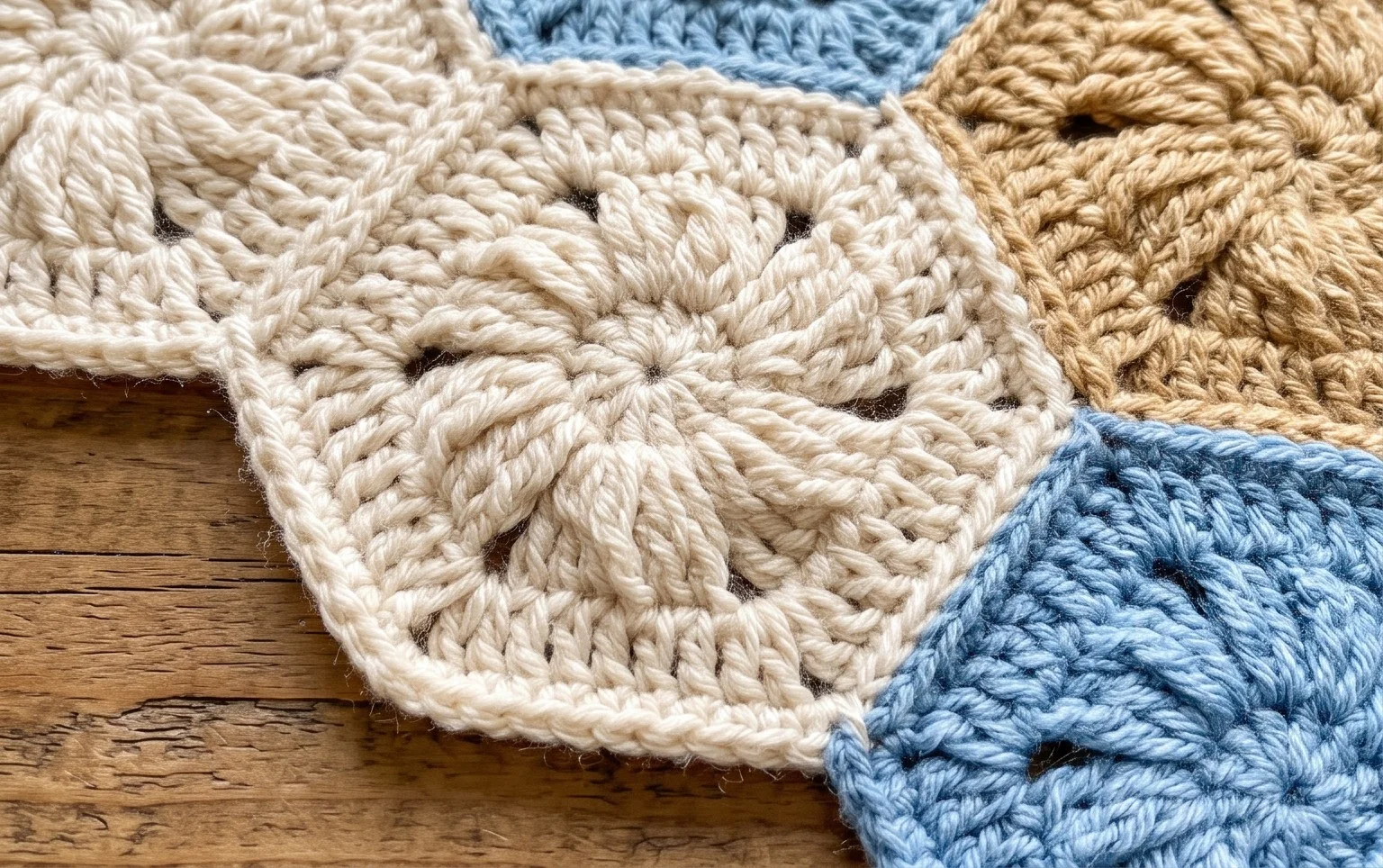
Your finished geometric afghan offers a wonderful sense of accomplishment once the final hexagon is joined. You might consider using a chunky wool blend if you want an even heavier throw for winter months, or you can stick with cotton for a lightweight summer version. Please share a photo of your color choices on social media so others can see your unique interpretation of this design. Check back on the blog next week to find more free designs for your next crochet project.