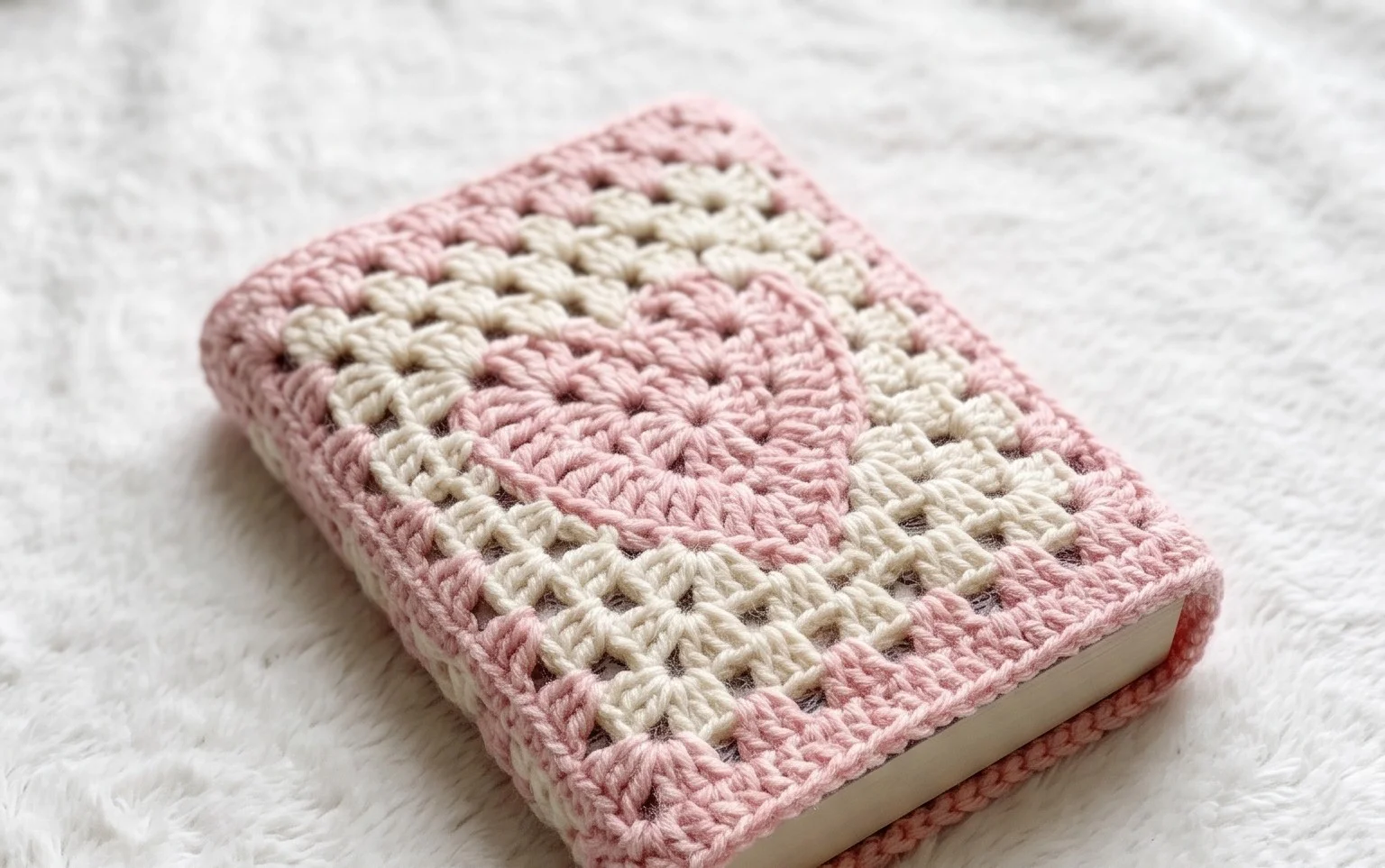
Crochet Heart Granny Square Book Cover: Free Pattern
A stack of weathered paperbacks gains a layer of soft protection when wrapped in this handmade fabric heart. This project uses the classic granny square technique, reimagined with a central motif that pops against your favorite novels or journals. It is a satisfying task for anyone who enjoys combining basic double crochet clusters with simple color changes to create a distinct shape. Whether you intend to protect a library book during a morning commute or you need a heartfelt gift for a friend who carries a diary everywhere, this cover offers a custom fit that feels sturdy in your hands. You will learn to map out the heart geometry within a standard square, adjusting the tension to ensure the finished piece stays snug against your book without slipping off during transport.
Why You’ll Love This Pattern
This classic crochet dishcloth relies on the durable linen stitch, which creates a dense, woven-like fabric that excels at scrubbing surfaces. Because the pattern uses simple single crochet stitches and chains, it is highly meditative and works up quickly for those who enjoy a repetitive, rhythmic stitch count. You can complete one cloth in a single afternoon, making it a perfect project for using up partial skeins of cotton yarn leftover from larger endeavors. It is also an ideal housewarming gift that balances aesthetic appeal with heavy-duty household utility.
I finished this dishcloth in just under two hours and the texture is exactly what I needed for cleaning cast iron pans without scratching them.
— Sarah, home crafter
Pattern Overview & Skill Level
- Skill Level: Beginner
- Approximate Time: 1.5 to 2 hours
- Construction: Worked in flat rows using a simple back-and-forth technique with a turning chain
- Finished Dimensions & Sizing: 8 inches by 8 inches
Materials & Supplies Needed
- Yarn: Worsted weight (#4) 100% cotton yarn, approximately 75 yards. Cotton is necessary for its absorbency and heat resistance.
- Hook Size: 5.0 mm (H-8) crochet hook to achieve a firm, functional drape.
- Notions: Tapestry needle for weaving in ends and a pair of sharp scissors.
- Safe yarn substitutions: You may use a cotton-linen blend for increased durability. Avoid acrylic or wool, as they lack the absorbency required for cleaning and will melt if they touch a hot surface. Using a different fiber or a lighter weight yarn will significantly reduce the finished size unless you increase your starting chain length.
Stitch Guide & Abbreviations (US Terms)
- ch = chain
- sc = single crochet: Insert hook into stitch, yarn over, pull up a loop, yarn over, pull through both loops on hook.
- sk = skip
- st = stitch
- sp = space
- sl st = slip stitch: Insert hook into stitch, yarn over, pull through both stitch and loop on hook.
Step-by-Step Pattern Instructions
Dishcloth Body
The entire cloth is worked in flat rows. You will be working your single crochet stitches into the chain spaces created by the previous row, which forms the signature moss stitch pattern.
- Foundation: Ch 32.
- Row 1: Sc in the 4th ch from the hook. *Ch 1, sk 1 ch, sc in the next ch. Repeat from * across to the end. Turn. (15 sc, 15 ch-1 spaces).
- Row 2: Ch 2, sc in the first ch-1 space. *Ch 1, sk the next sc, sc in the next ch-1 space. Repeat from * across, finishing with a sc in the turning chain space. Turn. (16 sc, 15 ch-1 spaces).
- Rows 3-30: Repeat Row 2 until the piece measures 8 inches square.
Finishing
Once you reach the desired length, fasten off your yarn, leaving a 6-inch tail. Use your tapestry needle to weave the tail back and forth through the base of the final row to secure it invisibly. Repeat this process for the starting yarn tail.
Care & Washing Instructions
- Machine wash in warm water on a gentle cycle to remove oils and food particles.
- Lay the cloth flat on a clean towel to air dry, which helps maintain the square shape.
- If the corners curl after washing, gently tug them into position while the cotton is still damp to reshape the piece.
Pro Tips & Common Mistakes to Avoid
Maintaining consistent tension is the most important factor for a uniform dishcloth. If your stitches are too loose, the cloth will lose its structural integrity over time. Use a stitch marker to denote the first stitch of every row to avoid accidentally dropping stitches at the edges, which is the most common reason for uneven sides. When weaving in your ends, ensure you go in at least three different directions through the fabric stitches; this prevents the ends from popping out after multiple trips through the washing machine. If you wish to make the dishcloth larger, simply increase your starting chain by any even number, noting that this will require more yardage than the standard 75 yards.
Frequently Asked Questions
Can I use a larger hook size for this pattern?
Using a larger hook will result in a cloth with larger gaps between stitches, which decreases the scrubbing power. Stick to the 5.0 mm hook for a dense, effective fabric.
Is this pattern suitable for someone who has never crocheted before?
Yes, this is an excellent starter project because it only uses the single crochet stitch and the chain stitch. It provides great practice for maintaining consistent tension.
Can I sell the dishcloths I make from this pattern?
You are welcome to sell finished items made from this design, provided you credit the pattern origin. Please do not sell or redistribute the written instructions themselves.
Why does my dishcloth look like a trapezoid instead of a square?
This usually happens due to missing stitches at the end of rows. Always count your stitches at the end of every row to ensure you have the same number of sc and ch-1 spaces throughout.
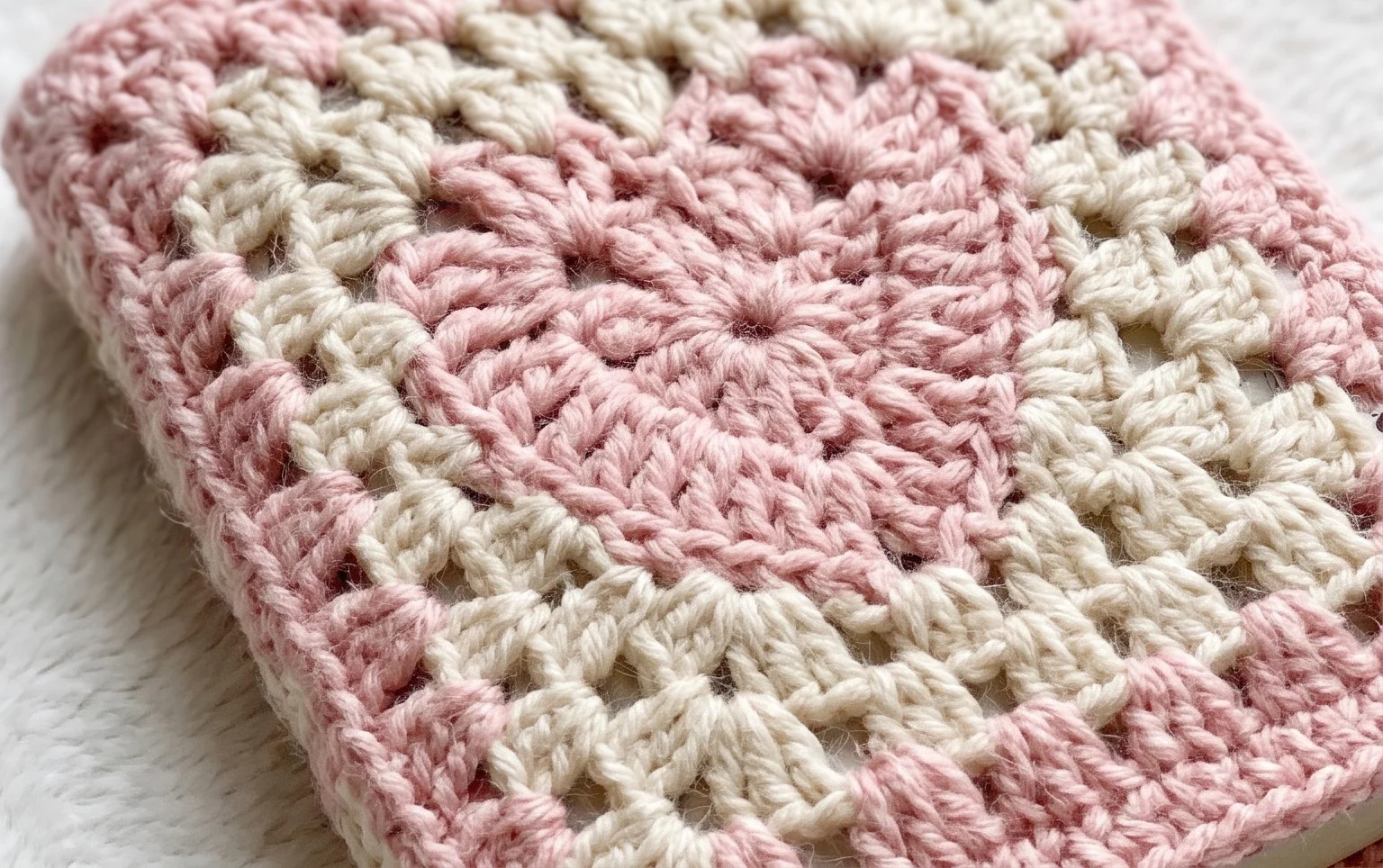
Seeing your favorite book encased in a cozy, handmade cover adds a personal touch to your daily reading habits. You might try substituting the cotton yarn for a soft wool blend if you prefer a squishier feel for cold winter nights. Please share a photo of your finished project on social media so others can see your color choices in action. You are welcome to browse the rest of the blog for more patterns that use classic construction methods for everyday accessories. Happy crocheting and enjoy your next chapter.